
The Roundtable Discussions Continue...
Day 2 of the Policy Roundtable was all about food…we talked about (and ate!) Vanuatu’s incredible local kakae, as well as embracing regional and international collaborations.


Today’s discussions were centred around the social and cultural value of food systems, as well as the importance of building regional and international connections within movements to challenge colonial structures, and reclaim local food systems.
We started with our local food ambassadors: Madame Votausi Mackenzie-Reur, Aunty Lynette Kalfau and Leonid Vusilai, who introduced the concept of gastronomy (wan bigfela toktok tumas) — explaining it’s true meaning as ‘the story of our food’. Votausi spoke to Vanuatu’s nomination for World Region of Gastronomy 2027 (IGCAT), expressing that ‘for me and my fellow ambassadors, the World Region of Gastronomy Candidacy is an opportunity to remind our people and to show the world that our islands have been blessed with plentiful resources to sustain our health and wellbeing into the future – so long as we are capable of remembering our past, and regenerating our future.’
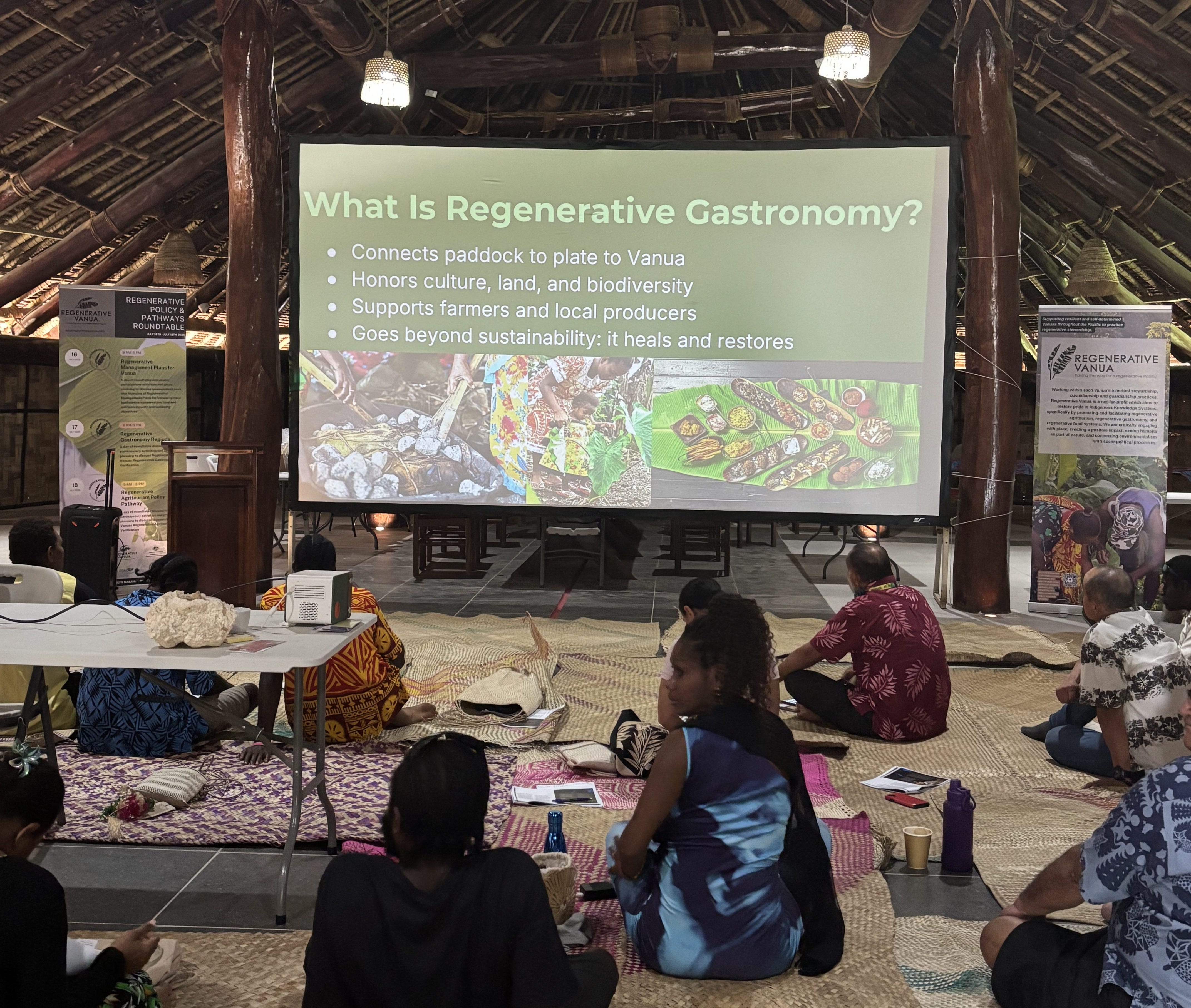
Chef Sarah King of Nourish to Thrive guided us through the principles of regenerative gastronomy standards, and explained that ‘Regenerative gastronomy can’t happen without regenerative agriculture.’ Leo Vusilai from Kai Vanua elaborated on this, and spoke to the fact that although gastronomy often has a strong focus on tourism and attracting international visitors, it is crucial to connect to the whole food story – which is why the connection between agriculture, gastronomy and tourism is so important. He also spoke to the importance of gastronomic experiences benefiting local people, and instilling pride in our local food culture, stating that:
We are not apologising for our culture anymore and we are standing proud of who we are. This policy is about making those who come to Vanuatu understand that when you come to our lands, you come to learn about us. To see who we are. To see what we grow. To see what our land and ocean offers to you. You do not come with your expectations that you will eat whatever you want: the food we do not grow here, the food that is not in season, the food you are used to, the food our colonisers brought here. When you come to Vanuatu, you will get the food that you need. Allow us to connect with you through our food stories. Allow us feed you, to nourish you, and to heal you with our kakae.
The Vice Chancellor of the Vanuatu National University echoed this sentiment when he told the group in his address: ‘our ancestors were never wrong. We have been told that our culture is wrong, our practices are wrong, but they have never been wrong. That is the reason why they still live today, thats the reason why we are searching to go back to our roots.’


Important points where also made about collaborating across Vanuas, that there must be consideration and respect embedded into these collaborations to ensure there is no imitation or theft, and that we preserve the boundaries of traditional knowledge and ensure intellectual and cultural property are honoured. Leo added that: ‘I have the right to speak for my own Vanua, where I come from, but I cannot tell the food story from another Vanua. The story of the food is the story of the people, the story of the Vanua. We must seek permission first before we can share.’
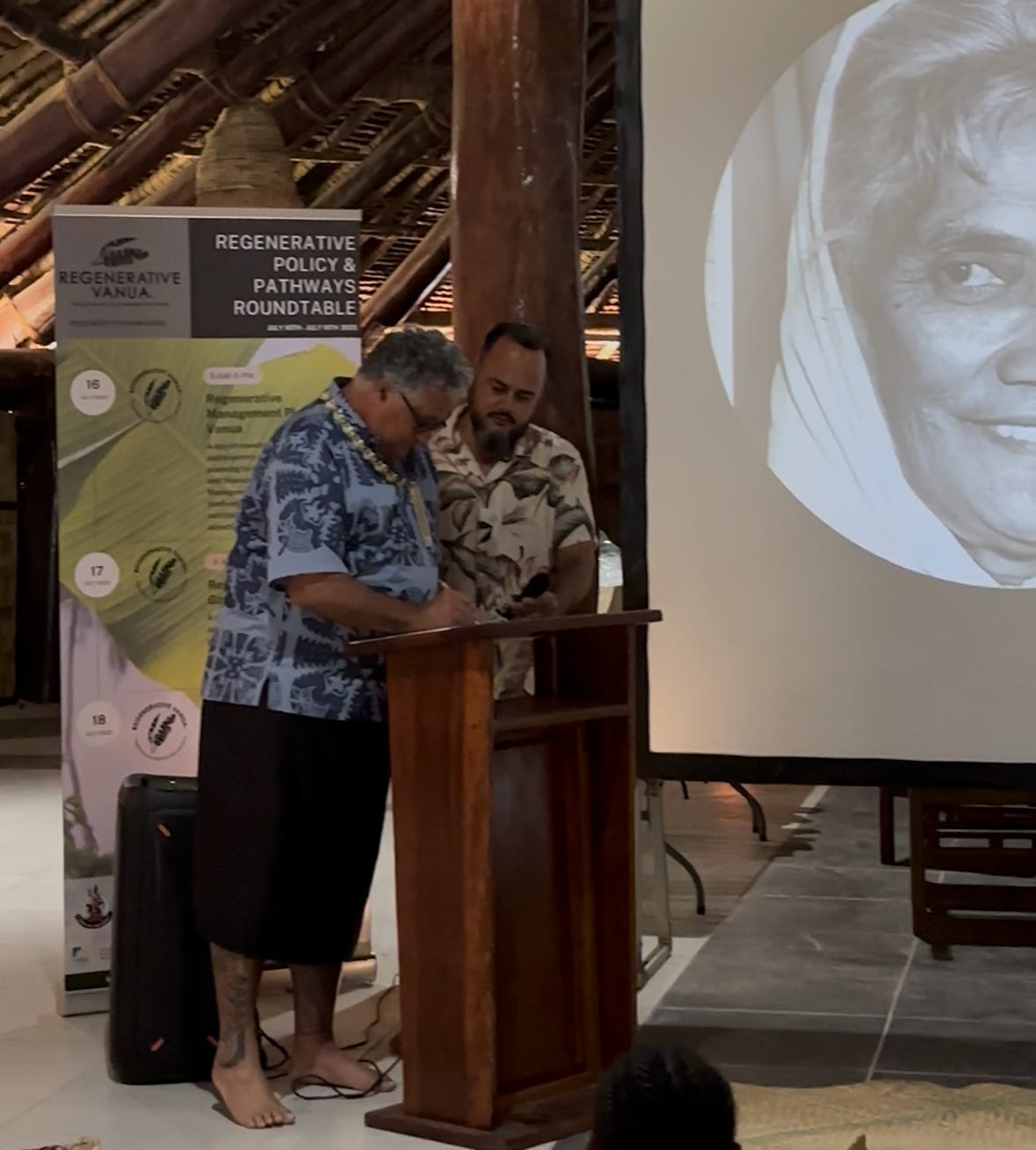
Conversations expanded into regional partnerships and collaborations – with some exciting new commitments and announcements being made in the Chiefs Nakamal. Our executive director Jerry Spooner and Hoturoa Barclay-Kerr (Tainui) from the Te Toki Voyaging Trust announced our new partnership, where we will help provide regenerative traditional waka journeys – the first beginning this month through a collaboration with Native Nations and WAITOC. Through this collaboration, Indigenous youth from Aotearoa, Australia and Vanuatu will be sailing between islands in the Penama Province, with plans for subsequent journeys (open to the public through a selection process) to trace the footsteps of these Indigenous youth.
Hoturoa confirmed the commitment to connecting the journeys to local food culture and tradition, stating that ‘at the moment before our journeys, we go to the supermarket and buy canned fish and rice…but through our partnership with Regenerative Vanua we hope to be able to prepare and eat the food that our ancestors ate on their waka voyages, sourcing local kai from regenerative farms and staying in regenerative agritourism businesses when we dock overnight in Vanuas.’
Another important regional partnership was announced between Tonga and Vanuatu, which officially begins the Vanuana Gastronomy and Culinary Federation. Vanuana is a coming together of ‘Vanua’, the Melanesian term meaning land and all of its relationships, and Moana, the Polynesian term for Ocean. The Vanuana Gastronomy and Culinary Federation is a body made up of Indigenous chefs and associations around the Pacific, and will enable members to protect and speak about their own food culture, empowering Indigenous chefs across the Pacific to protect the stories and soil of their Vanuas. The Federation was launched by Leonid Vusilai from Vanuatu and Tuituiohu Mafi from Tonga, and will grow to include representatives from all Pacific Nations to form a regional network.
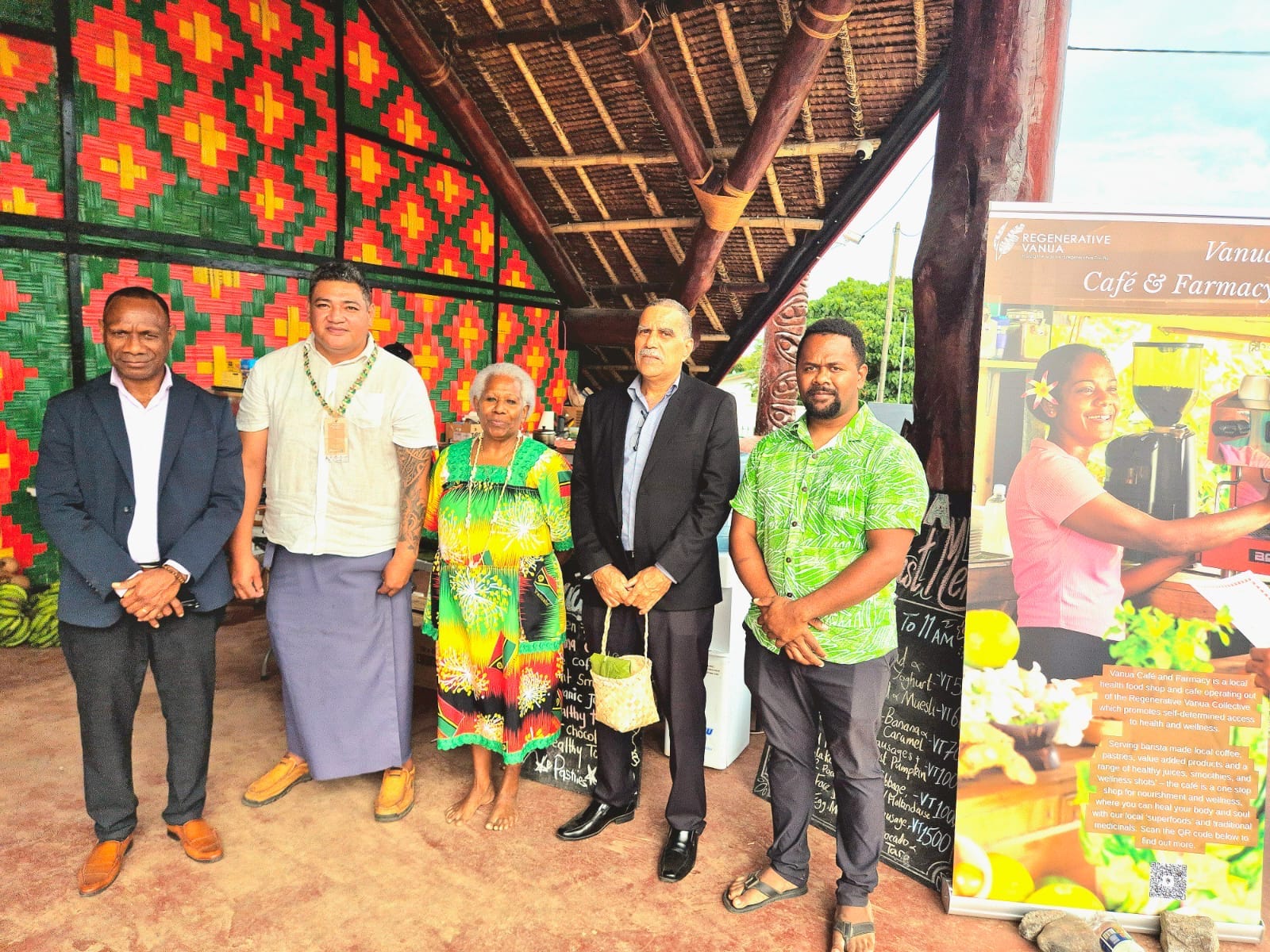
These regional partnerships are a beautiful enactment of the sentiment of the late Epeli Hauʹofa, who writes in his famous essay Our Sea of Islands:
We are the sea, we are the ocean, we must wake up to this ancient truth and together use it to overturn all hegemonic views that aim ultimately to confine us again, physically and psychologically…we must not allow anyone to belittle us again, and take away our freedom
(Hauʹofa, 1994)
Our Vanuas are not destinations, they are our homes, our supermarkets, our ‘Plan B’, our pharmacy, our doctor, our wellbeing. Our food stories are the stories of our people, and the stories of our Vanuas. We must protect them, and be proud of them. For generations to come.